
Inclusive provision by design
Teach East SCITT Director, Henry Sauntson, shares his views on inclusive and equitable training provision
‘It is the teacher’s expertise - their knowledge of their content and of their students - that is required to appropriately tailor their instructional strategies to the unique needs of their students, moving away from one-size-fits-all pedagogies’
Yann et al (2023)
There is – quite rightly – an increased focus on inclusivity in education; recent DfE releases have raised the importance of an understanding of SEND in mainstream schools as well as specialist provisions, and inclusion is very much front and centre of education policy.
But what does this look like in Initial Teacher Education (ITE)? Inclusion is a strand in the newly reformed OfSted Inspection framework for the sector, but the focus is not on the way in which providers design curricula that support novice teachers in acquiring the knowledge and skills necessary to teach in an inclusive way – the focus instead is on the way in which ITE providers are themselves inclusive, with the emphasis on the trainee as an individual as opposed to their developing competencies as a practitioner.
Inclusion should always be by design, never by accident; hope is never a sound defence for practice. At Teach East SCITT we want our trainees to feel as if they belong – that word carries such weight. Belonging is an essential part of confidence, competence and efficacy; success is the progressive realisation of a worthy ideal, and all our trainees want to feel supported as individuals as they progress through our curriculum.
The new OfSted framework asks us to consider elements such as diversity, equality of trainee experiences, continued evaluation of trainee needs, the impact this has on their teacher education, and the personalized support on offer; teaching is at heart a humanistic endeavour, and all trainees are individuals – they all have competing cognitive, social and emotional concerns that unfold alongside their training, and these muts be catered for.
That is why it is not good enough to simply pay lip-service to Inclusion as a buzzword; it has to be a core value, embedded at every stage of ITE provision. We look to ensure that, to quote the framework, we have a ‘transformational impact on trainees’ individual experiences due to their meticulous approach to promoting inclusion’. When we work with trainees, we are educating the educators – we use pedagogical principles to design and deliver an effective curriculum that puts the learner (in this case the trainee teacher) at the centre; we are responsive to the contingent needs of the trainee, adapting in real time to their changing experiences.
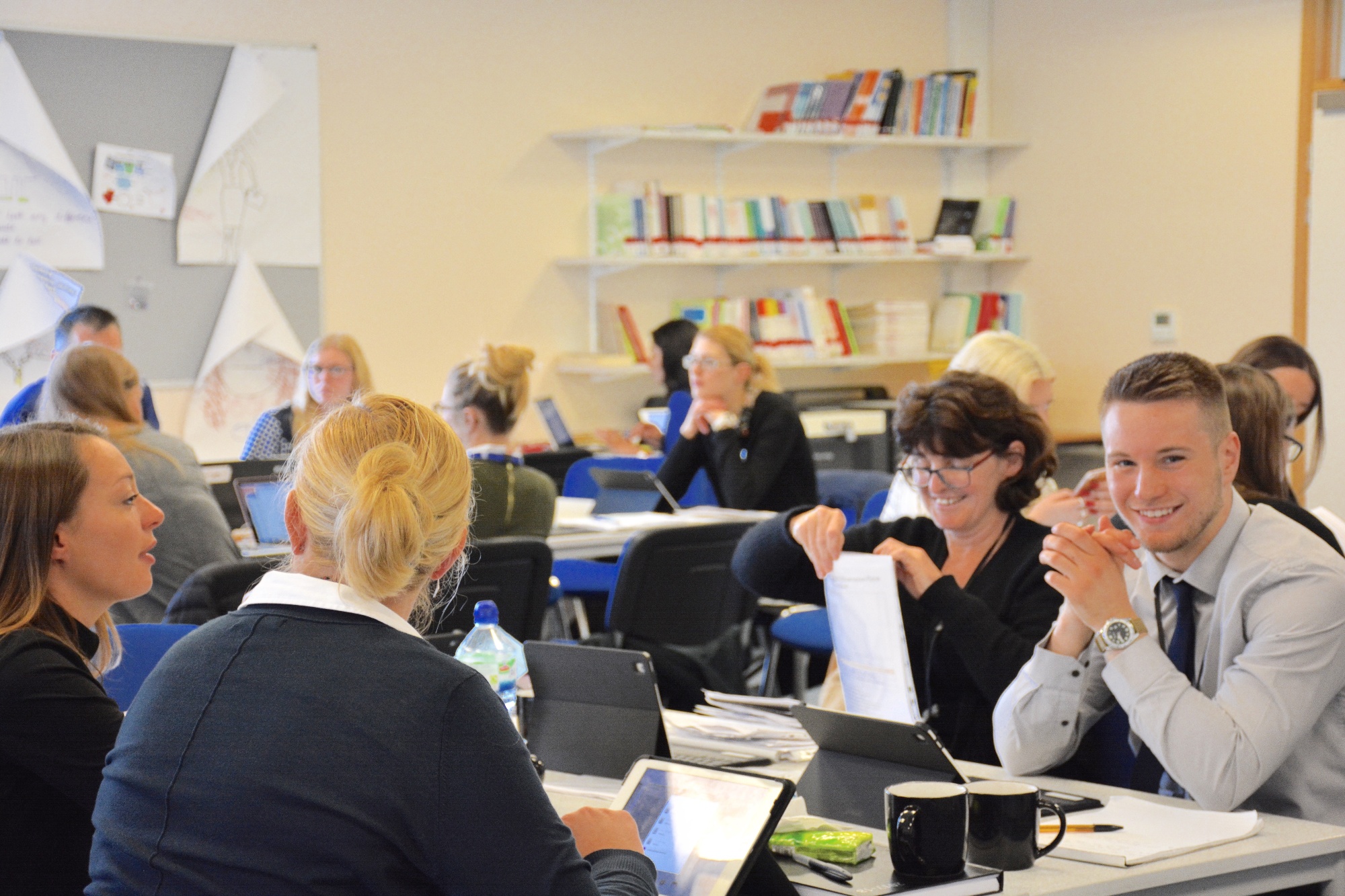
But – and a big ‘but’ – we must also be inclusive by design; we are proactive and forward-thinking in our planning for trainee experiences, from the initial conversation prior to interview to the selection of placement school, the appointment of the mentor and the content of the training room. We respond every day to the changing needs, perspectives and experiences of each trainee so as to ensure their progress through our curriculum; each trainee has a unique journey from Induction to Qualified Teacher Status. Ultimately, our curriculum is built on skills of open, honest reflection and evaluation; we work with trainees to develop their reflective capacity and deepen their understanding of their own practice wisdom, making adjustments and refinements to the individual trainee pathway.
As a Peterborough-based SCITT we serve our city and its students by putting effective teachers in its schools, but these are teachers who have been trained and educated in an inclusive manner; we celebrate diversity, we embrace adaptiveness, we respond to need. We work with our ever-expanding partnership network and take deliberate steps to ensure that the importance of inclusion is universally embedded and understood across our ITE provision.
Students can’t be what they can’t see, and the role of the teacher expands beyond the classroom and out into the communities served by the schools with whom we work. By acting as a role model to our trainees through our equitable and inclusive approach to their development, we raise the profile of said values in their own practice. It takes a village to raise a child; it takes an inclusive SCITT to raise an effective teacher.